Have you ever thought about joining the Military or becoming a DoD Civilian?
Is your Military time all most up and you are looking at what to do next?
If so, here is some information that might be helpful to you.

Pay
One of the things that will change a lot is going to be pay. While active duty, you get to enjoy things like your salary along with BAH, BAS, and once a year a uniform stipend. As a DoD civilian you do not get BAH, BAS, and definitely no uniform stipend. DoD civilian pay is broken up into 2 categories starting from GS1-GS15 for general schedule, and SES or senior executive service. For the sake of this post, we will stick to GS information.

If you know what your grade is when you join the DoD and know what location you shall be going to, this will help you better determine/understand what your payment will be. As I mentioned before, you do not get BAH or BAS, but you do get locality pay. There can be a drastic change from one place to the other so make sure that you do your homework when you are looking for a position so that you don’t get slapped with surprises. Buffalo, NY for example has a locality pay of 19.18% while New York, NY has 32.13%.
Don’t forget to make sure to look up the taxes that you pay in that area. In PA, for example, you pay a lot of taxes. There is state, federal, local taxes, tax for where your kids go to school, and a right-to-work tax! Fun stuff.
Benefits

School & Base Access
If you are married and have kids, but only one of you is working for the DoD, your family does not get base access. No dependent IDs etc. Your spouse could of course sponsor you on the base for special occasions, but don’t expect to be able to go on anytime. Of course, there are some exceptions to this rule, and if you are overseas, the rules are completely different. I will discuss that in another post.
Although your family does not have access to available facilities on base, you do. You have access to the gym, shoppette, cafes, dfacs, etc. Again there are possible exceptions to the rules, just ask.
Health Benefits
Unless you were retired in one way or another, or you meet the eligibility requirements for Tricare, you will have to shop around for new health care. For those that disliked Tricare, this is a good thing. For those who loved it, I am sorry. Believe it or not, there are a lot of options out there, and you get it at the Federal rate. When researching for health care, I recommend that you take the time to READ and UNDERSTAND exactly what you are covered for.
Here is an example: We have had Foreign Service Benefit Plan (FSBP) since David became a DoD civilian in 2015. One of the perks with this health insurance is that we get up to 50 visits/person/year up covered up to $60/visit. They also offer gym discounts and more. Just have to read the coverage and benefits book.
We have not had dental insurance because we just thought it would be perfectly fine to pay out of pocket for cleanings since we all had no dental issues. This worked perfectly fine for us while we were in South Korea. I finally decided to see about getting dental insurance around January 2020 and noticed on our dashboard in FSBP that we were covered for dental 100%. I was pretty happy with that. But to be sure I called and verified. I was told, “Yes ma’am, you are covered.”
Well fast forward to July 2020, we are now currently residing in Alaska. We took the kids in for a cleaning session. I wasn’t worried because we were covered for dental 100%. Lol. Out of the $1000 bill, we had to pay $975 because our 100% dental coverage was a maximum expense of $25. The receptionist/billing agent felt really bad and tried to help me by giving me tips on what to look for when getting dental insurance.
These questions also pertain to health insurance:
- What is the monthly premium?
- Is there a difference in how much it would cost for me to see in-network providers vs. out of network?
Maybe you will find a plan that you will like just as much. 🙂
Military Clause

While active duty, this clause has helped David and me more than once. The good news is that this clause would still apply to you as a DoD civilian. Of course, not all landlords are the same, but it would behoove you to read any rental agreements thoroughly. If you don’t see any mention of this clause in there, ASK! Our current landlord said that as long as we show PCS orders that will take us to another place, they will accept that.
Self-Improvement
Just like while you were on active duty, there are things that you can do to continue to improve yourself on the other side. Look for those opportunities to learn. There are leadership courses, team building, etc. just have to ask. There is even the option of getting your tuition paid for. Each of these lifetime learning benefits takes research, planning, and time to apply for as well as a possible waitlist depending on the number of people who are interested in the program as well as the budget for your division/branch/etc.

The best thing you can do is keep your eyes open for any of these opportunities and research them thoroughly for what it would cost you to receive this benefit. It is amazing really how many opportunities you can miss when you don’t know what to look for or understand what you can/can’t do. So MAKE SURE TO ASK!
Leave
While serving on active duty, you accrue 2.5 days of leave per month or 30 days per year. As a DoD civilian you get 13 days of annual leave a year if you have less than 3 years of service, 20 days if at least 3 years but less than 15, and 26 days if you have at least 15 or more. Other types of leave that you have beside sick leave and annual leave are travel comp, home leave, holiday, admin.
Travel comp is Compensatory time off for travel which is earned by an employee for time spent in a travel status away from their official duty station when such time is not otherwise compensable.
Home Leave is leave that you earn while serving 24 months of continuous service on permanent assignment overseas.
Administrative leave is also known as an excused absence from work without loss of pay or charge to your leave.
For more information about regulations, forms etc. click here.
*Bonus – RDOS or Rostered days off are days that you choose to have off every month. This is something that you can opt into if offered at your duty station. You can do this by working 9 hours every workday, then the Friday of every other week is a day that you don’t get off. Didn’t know anything about this until we came to Pennsylvania.
How things are done

Policies and procedures are very different now. Things that you could not get away with while you were active, are normal on the other side. For example, getting sick while you were on active duty. How many times did you call in because you felt miserable, but were told to go to sick call to get a slip for verification? Now you can just call in and stay home. Why? This is because you have sick leave. You get 13 days of sick leave each year.
Even after a few years as a DoD civilian we are still constantly learning about new things. Hopefully you can find more useful information here.
Unions
If you need help with an issue in the workplace, that cannot be taken care of through normal channels, you now have the option of going to your union representative.
I hope that this post was both informative and helpful to you. If you have something that you want to discuss or are curious about, please let us know and we shall do our best to help you.
Retirement: The Biggest Difference Between Active Duty and DoD Civilian
One of the most significant financial differences between active duty service and DoD civilian employment is the retirement system. Active duty members who serve 20 or more years receive an immediate, defined-benefit pension on the day they retire — a percentage of their base pay that continues for life. The traditional military retirement system provides 50 percent of base pay at 20 years, increasing by 2.5 percent for each additional year of service. Under the newer Blended Retirement System, the percentage is lower but soldiers also receive TSP contributions from the government during their service years.
DoD civilian retirement is handled through FERS (Federal Employees Retirement System), which has three components: a modest defined benefit pension based on years of service, Social Security contributions, and a Thrift Savings Plan (TSP). The FERS pension accrues at 1 percent of your high-three average salary per year of service (1.1 percent if you retire at 62 or older with at least 20 years). This means a 25-year DoD civilian career earns a pension of roughly 25 percent of salary, compared to 62.5 percent from an equivalent active duty career. The TSP and Social Security components are meant to make up the difference, but they require consistent personal contributions and investment decisions in a way that the military pension does not.
Career Growth as a DoD Civilian
One area where DoD civilian employment often compares favorably to active duty is career trajectory flexibility. As an active duty service member, promotion timelines are largely set by the military and competitive boards. As a DoD civilian, advancement from one GS grade to the next is often more within your individual control: you can apply for higher-graded positions, seek certifications that qualify you for upgrades, or negotiate a higher step within your current grade based on demonstrated performance.
The civilian career also does not come with mandatory PCS moves, though overseas positions and restationing opportunities are available for those who want them. For families who have done multiple PCS cycles and are ready for stability, the DoD civilian career path offers the ability to put roots down in one location while remaining connected to the defense community and mission that military service creates a genuine attachment to.
Tips for Making the Transition
- Start USAJOBS early. Federal hiring timelines are long. Begin searching and applying months before your separation or retirement date, not weeks. Understanding how to write a federal resume — which is significantly different from a private sector resume — is a skill worth developing before you need it.
- Know your veterans preference points. Eligible veterans receive 5 or 10 preference points on federal job applications, which can be a meaningful advantage in competitive hiring processes. Make sure your DD-214 is ready and your preference is correctly documented on every application.
- Look into Schedule A hiring. Veterans with service-connected disabilities may qualify for non-competitive hiring through Schedule A, which can significantly reduce the timeline from application to employment.
- Connect with a Transition Assistance Program (TAP) counselor. TAP exists specifically to help service members navigate the federal civilian hiring process. Use it. The information on USAJOBS navigation alone is worth the time.
Is the Transition Worth It?
For David and our family, the move from active duty to DoD civilian employment has been the right call. The stability, the continued connection to the defense mission, and the ability to leverage military skills in a civilian career that still matters have made the transition genuinely positive. The learning curve is real — the culture is different, the pace can be different, and the informal authority structures of military life do not translate directly. But the benefits, the schedule, the job security, and the quality of life improvements that come with not being subject to deployment timelines have been worth every adjustment. If you are approaching your separation or retirement and are wondering whether the DoD civilian path is right for your family, the answer for most military professionals is worth a serious look.
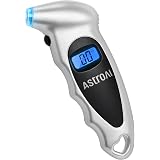
AstroAI Digital Tire Pressure Gauge 150PSI, ±1PSI Accuracy for Car Truck | Industrial Tire Gauge Calibrated to ANSI B40.7 with 4 Settings for Motorcycle Bikes, Silver
$6.25 (as of October 7, 2026 16:39 GMT -08:00 - More infoProduct prices and availability are accurate as of the date/time indicated and are subject to change. Any price and availability information displayed on [relevant Amazon Site(s), as applicable] at the time of purchase will apply to the purchase of this product.)
EcoNour Car Windshield Sun Shade, Front Window Sun Blocker for SUVs,Sedan
$11.39 (as of October 7, 2026 16:39 GMT -08:00 - More infoProduct prices and availability are accurate as of the date/time indicated and are subject to change. Any price and availability information displayed on [relevant Amazon Site(s), as applicable] at the time of purchase will apply to the purchase of this product.)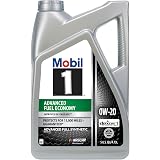
Mobil 1 Advanced Fuel Economy Full Synthetic Motor Oil 0W-20, 5 Quart | Enhanced Fuel Economy | 10,000-Mile Protection | Triple Action Formula
$31.97 (as of October 7, 2026 16:39 GMT -08:00 - More infoProduct prices and availability are accurate as of the date/time indicated and are subject to change. Any price and availability information displayed on [relevant Amazon Site(s), as applicable] at the time of purchase will apply to the purchase of this product.)
All-Purpose Stainless Steel Shower Squeegee for Shower Glass Door with 2 Adhesive Hooks, Bathroom Cleaner Tool Household Window Mirror Squeegee , Cleaning Tile Wall, Car, 10 Inch Silver
$9.48 (as of October 7, 2026 16:39 GMT -08:00 - More infoProduct prices and availability are accurate as of the date/time indicated and are subject to change. Any price and availability information displayed on [relevant Amazon Site(s), as applicable] at the time of purchase will apply to the purchase of this product.)