I have been asked many times about Intraday Trading or Day Trading. Most people do not fully understand what Day Trading is. When asked, most will think of movies such as WallStreet, Boiler Room, or The Wolf of Wallstreet. It is not that exciting to watch someone trade if you do not understand what is going on.
Overview
You may ask how I got started in Day Trading? So glad you asked or I would be writing this paper just to hear myself type. After my wife, Mary and I got out of the Army in 2009, we went to a TD Ameritrade event, yes, even in Austin, Tx. It was a super cool event; however, it did not click that Day Trading was something that I could do. It wasn’t until my family and I were stationed in South Korea that I jumped into really learning the markets. Yes, markets, plural.
- Equities (company stocks) New York Stock Exchange, Nasdaq, Tokyo Stock Exchange, Shanghai Stock Exchange, and Euronext Europe.
- Bond (Debt) Treasury, Corporate Debt, Mortgage Related, Municipal, Money Markets, Agency Securities, Asset-backed
- Commodities (Goods) Chicago Board of Trade, Chicago Mercantile Exchange, Commodity Futures Trading Commission, Euronext, London International Financial Futures and Options Exchange, NASDAQ OMX Commodities, National Futures Association, New York Mercantile Exchange.
- Futures (derivatives contracts Commodity and Securities) S&P 500, Nasdaq 100, Dow Futures, Russell 2000, Energy, Currency Futures, Metals, Food and Fiber, Grains and Oilseeds, Indexes, Interest Rates, Real Estate, etc. Day Trading ES and CL are my favorites!
- Foreign Exchange Market (Money) 128 currency pairs USD/CAD, EUR/JPY, AUD/USD GBP/JPY, USD/JPY, CHF/JPY, EUR/CAD, AUD/JPY, EUR/AUD, AUD/NZD
- Options (is a derivative market that is traded in contracts) Futures, Equities, and others have options.

Where to Start
Wow, where to start Day Trading? Well, for me, I Googled That Shit (GTS). Man, I must have spent days on all the research. Who am I kidding, I am still doing research. I was getting into the weeds of Day Trading different tax treatment between Stock and Futures or just holding Stocks short term (less than a year) and long term (over a year).
More, more and more questions!
What trading platform should I use?
Who’s training program should I buy?
Which broker should I use?
Are my computer and internet good enough? (I’m in Internet Technology, all you need is a good computer and internet, unless Mary asks, then I need something)

I decided to focus on Futures day trading because of the taxes and because I only had to learn a few key products, mainly Oil, Gold, E Mini S&P, and E Mini NQ. I bought a training course for $5,000 that taught the basics, the fundamentals, technical analysis, and how to use the trading software (NinjaTrader). Now I wasn’t making money on trading because the lead trader’s style was to scalp with a risk to reward ratio of 1:1. Risking $100 to make $100 is not my cup of tea. The NinjaTrader program may or may not be a scam but as with most things you can learn SOMETHING that you didn’t know before.
I went looking again. I came across The Oil Trading Group and spent the $3,000 for that course. After about a week of paper trading (My learning curve was small because of the other class), I went live (real money)—the risk to reward 5:1 or more. Trading allowed me to pay off both courses in 4 weeks.
Trade Worldwide
Trading in South Korea was difficult, the US market opened around 10:30 or 11:30 PM. I would trade between 01:30 – 03:00 AM, then go to bed and wake up at 06:00 AM for work. Now I wake up at 04:00 AM and trade until 06:30 AM then go to work.

During one trade, I asked my wife to come and see, she started to freak out. I was short ES (E-Mini S&P), I was positive on the trade of $1,500, and she wanted me to get out of it, “book the profit” I said that it has not hit my target yet. When it did, I booked a $3,800 profit on a 30-minute trade. I took the next day off and we went down to a bike shop and got Mary, Gabe, and Lily fitted for bikes, then we all biked the Han River. That was fun and my motivation. For me, it’s not about the money but the freedom that money buys.


Losing SUCKS! I lost $2,500 in a trade and I knew it was all my fault. It made me a little sick. After I got my head right, I got back in the saddle. I would look at what went wrong and how to fix it. 90% of it is all mental. The other 10% is diving deeper into market knowledge.
Two Year Break
I had to take two years off of day trading because my job was on the east coast and I couldn’t trade during regular trading hours, because they were the same as my work hours. Now that I am on the far west coast, I have to wake up wicked early, but I can trade.
It was time for the next step. I decided that I would learn to day trade Equities (stocks), so after a ton of research, I bought the Warrior Traders Pro course for $3,000. This course was a well put together class, and learning a ton of useful information. I have only been paper trading to this point because I would have to open a brokerage, and for trading stocks, you have to have $25,000 in your account (GO Futures! You don’t need that much)

Prop Trading
So, how to afford trading stocks? Well, I have been looking at Proprietary or Prop Trading firms. They teach you how to trade. First, you try out for a spot, and if you pass, you can trade Firm money and split the profit with you. You will have to pass the SIE and the Series 7 test. This is the professional league of trading.
The course I tried was T3 because they had a sale on their Road Map to a Funded Account at $195 per month. However, the training left something to be desired, and they switched from Sterling Trader Pro to ST Web. It did not have the same features, making it harder to trade. I canceled my tryout, if I wasn’t able to feel supported at that point, then it can only get worse.
The next firm that I was looking at is SMB Capital. I bought their Options course with tons of great content. However, to get into their try out, you have to go through 2 classes: $5,000 and $6,000. Spending money on a course that will bring my game to the next level is truly an investment. The ROI is more akin to multiplication then to addition. I just need capital first, so I am back trading Futures.
Maverick Trading Is another Prop Firm that I am looking at that is out of Ireland.
What is next
There are several Masters Degrees in Finance, Computational Finance, Economics, even a Master of Science in Commodity Trading degree at the University of Geneva. That would be SO freacking COOL!
MIT has a Masters in Finance and one way to get into the program is by taking MITx MicroMasters.
As I said earlier, I am in the Information Technology field and love nerding it up. One of my dreams is to build a Day trading robot (not an High Frequency Trading [HFT] or a Black Box).
In future articles I will go more in depth about what I do, yes even the screw-ups that cost real money. I am by far not an expert, nor will I ever find myself that pretentious. But learning is an adventure that I will continue to explore.
If you have any questions please leave a comment and I will address it.
Resources:
Books:
Introduction to Probability, 2nd Edition by Dimitri P. Bertsekas
Mastering R for Quantitative Finance by Edina Berlinger
Risk Management and Financial Institutions (Wiley Finance) by John C. Hull
Options, Futures, and Other Derivatives by John Hull
Bayesian Reasoning and Machine Learning Paperback by Prof David Barber
Market Wizards, Updated: Interviews with Top Traders Paperback by Jack D. Schwager 
Web:
YouTube:
The Mental Game: What Nobody Teaches You About Day Trading
Every course David bought covered the technical side of trading: chart patterns, indicators, entry and exit signals, platform mechanics. None of them spent adequate time on the most important factor in trading outcomes, which is mental discipline. The moment real money is on the line, the emotional responses that undermine trading decisions become dominant in a way that paper trading never prepares you for. The fear of a loss expands in real time, the euphoria of a winning trade tempts you to stay in past your target, and the frustration of a bad day can drive decisions that compound the loss rather than containing it.
David has a phrase for this: 90 percent mental, 10 percent technical. When a $2,500 loss made him sick to his stomach, the recovery was not going back to the charts immediately. It was getting his head right first, reviewing exactly what went wrong without ego, and returning to the market with a clear process rather than a need to get the money back. Revenge trading — increasing position size or taking low-probability setups to recover a loss quickly — is how a bad day becomes a catastrophic one. The discipline to stop trading after a predetermined loss limit for the day is not a sign of weakness. It is risk management.
Risk Management Basics for New Traders
- Define your risk per trade before you enter. Know exactly how much you are willing to lose on any single trade, and set your stop accordingly. Trading without a defined stop is speculation, not strategy.
- Use a risk-to-reward ratio of at least 2:1. If you are risking $100 to make $100, you need to be right more than 50 percent of the time just to break even after commissions. A 5:1 ratio means you can be wrong four out of five trades and still be profitable on a risk-adjusted basis.
- Set a daily loss limit. Decide before you open the platform how much you are willing to lose in a single day. When you hit that number, close the platform and do something else. No exceptions.
- Paper trade until the process is automatic. The goal of paper trading is not to prove you can make money in a simulated environment — it is to make your entry and exit processes automatic enough that emotional pressure does not derail them when real money is involved.
Day trading is not passive income and it is not a lottery. It is a skill-based activity that rewards preparation, discipline, and continuous learning in the same way that any other high-level professional skill does. The people who make money trading consistently are the ones who approach it with the same rigor they would bring to any other field where the consequences of poor performance are immediate and measurable. If that description appeals to you, the resources David has outlined in this post are a starting point worth exploring seriously.
Trading has become more than a side pursuit for David. It is a daily practice of discipline, research, and continuous improvement that mirrors the same ethos that drove his military and technology careers. The market does not care about your rank, your credentials, or your intentions. It only responds to what you do with the information you have in the moment you have it. That accountability is part of what makes trading genuinely compelling for someone who has spent a career in high-stakes, outcome-focused environments. More posts on the specifics of his process, his setups, and the continued evolution of his approach are on the way.

Drift Car Air Freshener - The Original Wood Air Freshener - Car Odor Eliminator - Long Lasting Scent - Auto Accessories - Metal Clip - Essential Oils - Clean Ingredients - Teak Scent Starter Kit
$12.95 (as of October 21, 2026 17:49 GMT -08:00 - More infoProduct prices and availability are accurate as of the date/time indicated and are subject to change. Any price and availability information displayed on [relevant Amazon Site(s), as applicable] at the time of purchase will apply to the purchase of this product.)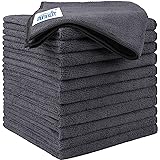
HOMEXCEL Microfiber Cleaning Cloth 12 Pack, 12.5 x 12.5 inch Microfiber Towels for Cars, Ultra Absorbent Washing Cloth, Lint Free Streak Free Cleaning Rags for Car, Kitchen, and Window (Grey)
$5.98 (as of October 21, 2026 17:49 GMT -08:00 - More infoProduct prices and availability are accurate as of the date/time indicated and are subject to change. Any price and availability information displayed on [relevant Amazon Site(s), as applicable] at the time of purchase will apply to the purchase of this product.)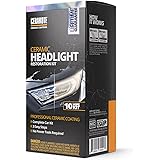
CERAKOTE® Ceramic Headlight Restoration Kit, 10 Wipe Kit | Restores clouded, yellowed headlights, ceramic UV protection, 3-step wipe system, no power tools needed
$17.95 (as of October 21, 2026 17:49 GMT -08:00 - More infoProduct prices and availability are accurate as of the date/time indicated and are subject to change. Any price and availability information displayed on [relevant Amazon Site(s), as applicable] at the time of purchase will apply to the purchase of this product.)
AIDEA Microfiber Cleaning Cloth-50PK, Microfiber Towels for Cars, 12"×12" | Premium Wash Cloths, Dusting Cloth Cleaning Rags, Absorbent Towels for SUVs, House, Kitchen, Window, Cleaning Supplies
$14.99 (as of October 21, 2026 17:49 GMT -08:00 - More infoProduct prices and availability are accurate as of the date/time indicated and are subject to change. Any price and availability information displayed on [relevant Amazon Site(s), as applicable] at the time of purchase will apply to the purchase of this product.)