Money is not Evil

We have all heard that …money is the root of all evil. However, that is not the actual quote. It makes a difference and we will be talking about it in this post. The real quote is:
For the love of money is the root of all evil: which while some coveted after, they have erred from the faith, and pierced themselves through with many sorrows.
1 Timothy 6:10
For the LOVE of money, this does not state that money is evil but the love of it is. This seemingly minor detail is the source of many people having a horrible relationship with money.
Have you heard some of these sayings?
- “Money doesn’t grow on trees.”
- “I am not made out of money.”
- “Money won’t make you happy.” ~ my favorite
One of the best comebacks for the last one is, “Being poor won’t make you happy either.” This is all “Small Thinking” if person A says that they want to make $60,000 and person B says they want to make a million dollars. Now let us say they both fail by 30%, person A made $42,000 and person B made $700,000.

For myself, it is not the money that I love but the freedom and experiences that it CAN buy. When I was growing up my father and I were poor, not world poor, but American poor. My father could make the best beans. This stressed my dad out so much. I never wanted that life for my family.
Definitely Happier With More Money
I joined the Army and I was still poor, I had food, room/apartment, cell phone, and Xbox. I was doing OK. Got married, had Mary’s pay, my pay, received BAH and other benefits we were upper poor. It wasn’t until we had kids and both Mary and I got out of the military that I really started to work on my marketability, not for money, but for me. What happened was, the more that I invested into myself the more I was valued.
I went from making SGT pay about $32,958, to $130,000 in Afghanistan as a contractor. Then, I was headhunted for a contracting job in Iraq for $125,000, the benefits made it worth the move. My next position was in Seattle for about $69,000. Now you can see I wasn’t chasing the almighty dollar. Why you may ask? We, at the time, thought this move would be a better work-life balance. It wasn’t. It was, however, a great opportunity to show off my skills and it paid off. Next, I was offered a position in South Korea, pay $65,000 with many other uplifts and benefits. The biggest was living overseas and being able to have my children immersed in their culture.

While overseas we were able to spend money on something that is FAR more valuable, TIME.
Time with family and friends making memories and having unique experiences. Such as paying for my mom to fly from Southern California to Korea. Paying for my brother to visit us in Korea and then on a whim buy the family tickets to spend a week in Cebu Philippines. This is what makes me want to do better. If that means making more money to do it, well then I need to find better ways at doing that. Going on a cruise with a family of 5 is not a cheap adventure, but the ROI is worth more than the money. Our First Cruise.
On February 20, 2020, Mary had to take our son to the ER because he was kicked in the knee on the bus. The ER visit cost $500 co-pay. I was glad to easily pay it to get access to treatment. Another example of how money reduces stress in an already stressful situation.
One of the greatest feelings that I get is not worrying about the price when we go out to eat or some entertainment. This is a far cry from Mary’s and my childhood.
When Money Makes You Miserable
I believe that the blogs that create the most value are the ones that are transparent.
When someone says “more money more problems” I cringe inside. Most people use money in ways that make them less happy. I know I may have lost some of you there, but stick with me and I will show you that I am no exception. Even knowing what we know, we are all susceptible to it, it is how we act once we see it.
I was promoted twice more and we moved back to the United States now I make over $100,000, but and this is a BIG BUT, we took on more debt and live in a place that is more taxed and expensive. We wanted the best school in the area for our children, this decision has us living in an apartment and rents $2,300 per month.
We needed a car once we returned to the United States and our Van was taking a long time to arrive from Korea. I also wanted a Tacoma truck, so now we have 3 vehicles and are paying about $1,200 per month in car payments. We have 2 consolidation loans of about $700 per month (we have better interest rates) because we paid for the move from Korea to the States on a credit card.
This is one of the biggest downfalls of making more money if you are not ready for it or plan it. At one point we were $102,893.40 in debt (know your numbers). Extra money won’t make you happy if it tethers you to a heavily indebted lifestyle.
Perhaps the love of money and debt is a more apt depiction of the root of evil. In my post Murdering Debt, I show one of the tactics we are using in combating debt for a freer future. I will write more posts on tactics on how to increase your income as we are on the same journey.
Bottom Line
Money will make you happier only if you choose to spend it in accordance with your values and your preferences. I couldn’t say it better than Sam over at Financial Samurai.
“When people start telling you money can’t buy happiness, take a good hard look at their finances. They are likely telling you this because they don’t have much money themselves. They haven’t tasted the freedom money buys. And if they so happen to be research Ph.D.’s, well you can forget about their advice right there. If they are super-rich, then you know they are just trying to blend in and not look selfish.”
“Money can buy happiness because money buys peace of mind and opportunities for great experiences. Don’t be fooled by ego-consoling research and those who espouse! They are just trying to keep you from achieving your financial goals so they can feel better about themselves.”
Money is a tool, a means to an end. That end is peace of mind and opportunities for great experiences. I believe that it is my duty to provide the very best I can for my family. I know you believe the same.
6 Stages of wealth is a great resource.
Practical Money Habits That Changed Everything for Us
Knowing that money is a tool is one thing. Building the habits that let you actually use it as one is another. For our family, the shift from reacting to money to managing it intentionally happened in stages, and most of those stages were triggered by hitting a wall. The $102,893 in debt was a wall. The realization that a six-figure income had not made us financially secure was a wall. The discipline that followed those moments came from treating money management as a skill to develop, not a personality trait you either have or do not have.
- Track every dollar, every month. Not to restrict spending, but to make invisible patterns visible. Most families do not have a spending problem; they have an awareness problem. Until you see where money is actually going in categories, you cannot make rational decisions about where you want it to go.
- Know your numbers cold. David could tell you at any point exactly how much total debt the family carried, what each interest rate was, and what the payoff timeline looked like at the current payment pace. That knowledge is not anxiety-inducing once you have it. It is empowering.
- Separate needs from wants clearly. Not judgmentally, but practically. The $2,300 apartment near the best school was a want that became a need when weighed against the value of that education. The third vehicle was a want that created a want-sized problem. Knowing the difference in real time prevents lifestyle inflation from running ahead of income growth.
- Invest in yourself before investing in markets. Every dollar David spent on developing marketable skills returned multiples in income growth. The jump from military pay to contractor pay, and from there through the progression of IT positions, was driven entirely by skill investment, not market investing.
Money as a Military Family: Specific Advantages Worth Using
Military families have access to financial tools and benefits that most civilian families do not, and many service members underutilize them significantly. The Thrift Savings Plan offers some of the lowest expense ratio index funds available to any investor anywhere. USAA and Navy Federal Credit Union offer financial products at rates that are competitive with or better than civilian alternatives. The Savings Deposit Program during deployment pays 10 percent guaranteed annual interest on deposits up to $10,000, which is an extraordinary guaranteed return available to no civilian investor.
BAH is perhaps the most underappreciated wealth-building tool in the military compensation package. In many duty station markets, BAH covers or exceeds actual housing costs, creating an opportunity to build equity through homeownership at below-market effective cost, or to save the difference between actual rent and the BAH amount. Families who treat BAH as a dedicated housing allowance and structure their housing choices around maximizing what is left over are in a fundamentally different financial position after 10 years than families who expand their housing consumption to absorb the full benefit.
The Real ROI: Experiences Over Things
The clearest financial principle that has guided our family decisions over the years is simple: experiences compound in value over time in a way that things do not. The trip to the Philippines on a whim, the cruise with five people, paying for family to fly to Korea — those moments exist permanently as memories and stories. The third vehicle sits in the driveway depreciating at a rate that makes the monthly payment look small compared to the total cost. This is not an abstract philosophical observation. It is a practical budget framework. When a spending decision is in front of you, the question is: will this generate compounding value over time, or will it depreciate? The answer does not always lead to the same conclusion, but asking the question consistently leads to better outcomes over years than not asking it at all.
The Next Step: From Debt Reduction to Wealth Building
Getting out of debt is the prerequisite, not the destination. Once debt service is eliminated from the monthly budget, the freed cash flow becomes the fuel for actual wealth building. For most military families, the progression looks like this: eliminate high-interest consumer debt, build a 3-to-6-month emergency fund, maximize TSP contributions (at minimum to capture the full employer match under BRS), then begin taxable investment contributions or additional mortgage principal payments depending on the situation.
The goal David works toward is not a specific number but a specific condition: enough financial resilience that no single unexpected expense or income disruption threatens the household. That condition — sometimes called financial independence in personal finance circles — is built one boring consistent month at a time. It does not require a $300,000 salary or a single lucky investment. It requires spending less than you earn, eliminating the debt that consumes the difference, and investing the freed cash flow in assets that compound over time. The math is not complicated. The execution is.
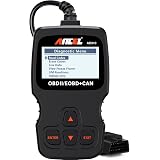
ANCEL AD310 Classic Enhanced Universal OBD II Scanner Car Engine Fault Code Reader CAN Diagnostic Scan Tool, Read and Clear Error Codes for 1996 or Newer OBD2 Protocol Vehicle (Black)
$29.99 (as of October 21, 2026 17:49 GMT -08:00 - More infoProduct prices and availability are accurate as of the date/time indicated and are subject to change. Any price and availability information displayed on [relevant Amazon Site(s), as applicable] at the time of purchase will apply to the purchase of this product.)
KMM Handheld Car Vacuum Cleaner, Hand Held Vacuum Cleaner and Air Duster | 9000PA Strong Suction, Cordless, 120W High Power, Multi-Nozzles & LED Light, for Home, Car, Office, Pet
$22.43 (as of October 21, 2026 17:49 GMT -08:00 - More infoProduct prices and availability are accurate as of the date/time indicated and are subject to change. Any price and availability information displayed on [relevant Amazon Site(s), as applicable] at the time of purchase will apply to the purchase of this product.)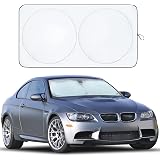
EcoNour Car Windshield Sun Shade, Front Window Sun Blocker for SUVs,Sedan
$11.99 (as of October 21, 2026 17:49 GMT -08:00 - More infoProduct prices and availability are accurate as of the date/time indicated and are subject to change. Any price and availability information displayed on [relevant Amazon Site(s), as applicable] at the time of purchase will apply to the purchase of this product.)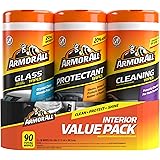
Armor All Car Cleaning Wipes, 90 Ct - Interior, Protectant & Glass Wipes | Armor All car interior value pack, auto cleaning wipes for windows, mirrors and protectant for vinyl & plastic, 30 count each
$15.99 (as of October 21, 2026 17:49 GMT -08:00 - More infoProduct prices and availability are accurate as of the date/time indicated and are subject to change. Any price and availability information displayed on [relevant Amazon Site(s), as applicable] at the time of purchase will apply to the purchase of this product.)