At some point in our lives, we find ourselves with some or a lot of debt. Here are some of the biggest questions: How a simple debt calculator can make all the difference.
How fast can I get out of debt?
How much can I save in interest payments?
First we have to find out were did the debt come from (credit cards, loans, medical, car, etc). Then we find the interest rate of each of the debt vehicles, this will be on the statement and on the web portal. Finally we find the exact monthly payment down to the penny.
We need to write this all down. In my experience seeing is believing, if I have the data but cannot visualise it into information then it is worthless and I will forget it. However, if I can see that:
Debt Reduction Calculator for Excel
| Personal Loan #2 | 23,415.24 | 8.99% | $542.22 |
| Interest Paid | Months to Pay Off | Month Paid Off |
| 2,341.80 | 25 | May-2022 |
Now we have turned that data into information and can use it to make better decisions.
Dave Ramsey is a leader in this space of debt free living. I agree in principle but some of the tactics I may want to debate. Such as where you pay off debt in order of smallest to largest, gaining momentum as you knock out each balance. When the smallest debt is paid in full, you roll the money you were paying on that debt into the next smallest balance.
I have “played” around with Debt Reduction Calculator which is set up to help you do case studies and see what works for you. I found that if I paid off the highest interest first I would save $9,000 in interest and still be able to Snowball. Also, according to Dave all debt is bad, I disagree on this point. Yes, some unsecured debt is bad however, I was able to borrow money at a great interest rate to pay off a higher rate loan.
This gets into the Time Value of Money (TVM) not to get to deep for this article it states that,” money today is worth more than tomorrow.” Given that money can earn compound interest, it is more valuable in the present rather than the future.
| Creditor | Balance | Rate | Payment | Interest Paid | Months to Pay Off | Month Paid Off |
| Good Loan | 23,262.00 | 0.88% | $396.66 | 87.99 | 10 | Feb-2021 |
So what does this mean? Well first you would save about $2,300 in interest payments. The $542 monthly payment could help pay off the new debt faster.

With this calculator you are able to see which of the different strategies works best for you.
The decisions you make today will affect tomorrow. So make smart ones.
Warning: It may be tempting to put your full financial strength into paying off your debts. Be careful about doing that. You need to balance your debt reduction goals with the need for an emergency fund and other important financial goals. In these cases, it can be useful to seek the advice of a qualified professional.
Conclusion
Debt is not always a bad thing, it helps to start a business, buy a house or car. When debt is out of control and unserviceable it can be so scary that your health, relationships, and life can be affected all in negative ways. My intention is to wake you up, and help you take control back. For me it was: What am I not teaching my children about life? and What do I not know about life? Debt is one big facet of life. Lets get smarter for them.
Two Debt Reduction Strategies: Snowball vs Avalanche
The two most widely used debt reduction strategies are the snowball method and the avalanche method. Understanding both helps you choose based on your specific debt profile and how you respond to progress.
The debt snowball, a method popularized by Dave Ramsey, has you list debts from smallest balance to largest, make minimum payments on everything, and put all extra money toward the smallest balance first. When it is paid off, you roll that payment amount into the next smallest. The mathematical argument against it is that you may not be eliminating the highest-cost debt first, meaning more total interest paid. The psychological argument for it is strong: early wins build momentum, and momentum is what keeps a debt reduction plan alive through difficult months.
The debt avalanche has you list debts by interest rate from highest to lowest and attack the highest rate first regardless of balance size. Mathematically, this minimizes total interest paid over the life of the payoff. Running the numbers through the debt reduction calculator for the scenario David analyzed, paying off the highest interest debt first saved approximately $9,000 in total interest while still producing a rolling payoff effect as each debt was eliminated. For people who can maintain discipline without the early psychological win of a small balance payoff, the avalanche is the more efficient approach.
A Step by Step Debt Reduction Plan
- List every debt. Creditor name, exact balance, interest rate, and minimum monthly payment. Look up each one. Estimating is not sufficient — the plan requires real numbers.
- Calculate your total minimum payment obligation. This is the floor of your monthly debt service. Every dollar above this can be directed strategically at one target debt at a time.
- Choose your strategy. Snowball if you need early wins to stay motivated. Avalanche if you want to minimize total interest paid and can stay disciplined without the early win.
- Find your extra payment amount. Review your monthly budget and identify spending that can be redirected to debt reduction. Even $100 to $200 per month above minimums accelerates payoff timelines significantly when applied consistently to a single target.
- Automate minimum payments on all debts. Remove decision fatigue from the baseline. Set up automatic payments for every minimum, then manually direct the extra payment to your target debt each month.
- Do not add new debt while executing the plan. This seems obvious but is the most common reason debt plans stall. Every new balance resets the timeline and erodes motivation.
Emergency Fund vs Debt: Which Comes First?
The mathematically correct answer is to pay down high-interest debt first, since eliminating a 20-percent credit card is a guaranteed 20-percent return. The practical answer is more nuanced. Without any emergency reserve, the first car repair or unexpected medical bill goes back on the credit card, undoing recent progress and creating a discouraging cycle. Most financial planners recommend building a starter emergency fund of $1,000 to $2,000 first, then aggressively attacking high-interest debt, then building a larger 3-to-6-month fund after the expensive debt is eliminated.
The Mental Shift: From Dread to Plan
The moment David entered $102,893 into the debt calculator, the number stopped being a vague looming weight and became a solvable problem with a defined timeline. That shift from dread to plan is one of the most underrated benefits of taking a full debt inventory. Debt that lives in your peripheral vision as a general feeling of financial pressure is far more mentally taxing than debt that lives in a spreadsheet with a payoff date next to each balance. The calculator does not eliminate the debt. It eliminates the anxiety by replacing it with a system you can execute, adjust, and track every single month.
Good Debt vs Bad Debt: The Distinction That Matters
Not all debt is created equal, and treating it as a single category leads to worse decisions than understanding the distinction between debt that builds assets and debt that consumes income. Good debt, broadly defined, is debt taken on at a manageable interest rate to acquire something that holds or increases in value over time: a home, an education that increases earning power, or a business investment with a credible return on investment. Bad debt is debt taken on to fund consumption at high interest rates, particularly revolving credit card balances at 18 to 25 percent annual rates.
The consolidation loan example David described illustrates the distinction practically. Paying off a higher-rate debt with a lower-rate loan is not adding debt — it is restructuring it in a way that reduces total cost and accelerates payoff. The math of a 0.88 percent loan paying off a debt that was accruing at 8.99 percent is straightforward. The saving of approximately $2,300 in interest and the freed-up $542 monthly payment that can then be redirected to additional debt reduction is a real and meaningful outcome. The tool is not the problem. The misuse of the tool is the problem.
Tracking Debt Over Time: Why Consistency Beats Intensity
One of the most common patterns in debt reduction is the burst-and-fade cycle: intense focus for a month or two, real progress, then a life event or a difficult month, a missed extra payment, and a gradual return to the previous baseline. The antidote to burst-and-fade is building a review habit that happens regardless of whether the month was good or bad. A monthly debt inventory — updating every balance, recalculating the payoff timeline, noting any changes in interest rates or available consolidation options — keeps the plan visible and the motivation present even in the months where execution was imperfect.
The free debt reduction calculator David referenced in this post is an excellent starting point for building this review habit. The goal is not to obsess over the numbers daily but to have a monthly ritual that keeps you oriented toward the destination rather than lost in the day-to-day. Think of it as a financial navigation check: you do not stare at the compass every second, but you check it regularly enough to know you are still heading in the right direction.
Teaching Debt Awareness to Your Children
One of the most powerful motivations David and Mary have identified for getting serious about debt reduction is the question of what they are modeling for Gabe and Lily. Children who watch their parents navigate debt consciously — who understand that the family is working on paying something off, who see the monthly review happen, who hear the adults talk about financial decisions in terms of tradeoffs rather than impulse — are receiving a financial education that no school curriculum provides. They are learning that debt is manageable, that financial difficulty is not shameful but solvable, and that the adults in their household take responsibility for their numbers. That is a foundation worth building, independent of the specific debt amounts involved.
Start Somewhere: The First Action Matters Most
The most common reason people do not start a debt reduction plan is not lack of knowledge. It is the gap between knowing what to do and doing the first uncomfortable thing. Pulling up every account and writing down the real numbers is that first thing. It takes about an hour. It produces a complete picture that is almost certainly less frightening than the vague weight of unexamined debt. The calculator turns that picture into a timeline. The timeline turns an abstract problem into a project. And a project can be executed, adjusted, and finished.
Our family was $102,893 in debt at peak. That number is in a post on this site not because it is comfortable to share, but because the most useful thing a family in that position can hear is that another family has been there, taken inventory, made a plan, and worked through it. The decisions you make today about debt — whether to look at the numbers, whether to build a plan, whether to redirect one extra payment this month — compound in the same direction as the debt itself. Start somewhere. Start today. The calculator is free.
Debt is not a character flaw. It is a set of numbers on a page that can be added up, analyzed, and systematically reduced. The only requirement is the willingness to look at the page. Pull out the debt reduction calculator, write down every balance and rate, and let the math show you what is actually possible. The path from $102,893 to zero begins with exactly that one step.

Rain-X 600001 Windshield Repair Kit for Chips, Cracks & Bullseyes | Quick, Easy, Durable Resin-Based Glass Repair Kit, For Round Damage Below 1" in Diameter and Cracks Smaller Than 12" Length
$12.67 (as of October 21, 2026 17:49 GMT -08:00 - More infoProduct prices and availability are accurate as of the date/time indicated and are subject to change. Any price and availability information displayed on [relevant Amazon Site(s), as applicable] at the time of purchase will apply to the purchase of this product.)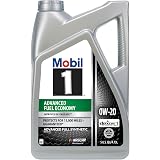
Mobil 1 Advanced Fuel Economy Full Synthetic Motor Oil 0W-20, 5 Quart | Enhanced Fuel Economy | 10,000-Mile Protection | Triple Action Formula
$31.97 (as of October 21, 2026 17:49 GMT -08:00 - More infoProduct prices and availability are accurate as of the date/time indicated and are subject to change. Any price and availability information displayed on [relevant Amazon Site(s), as applicable] at the time of purchase will apply to the purchase of this product.)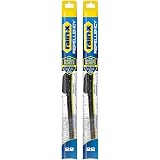
Rain-X 810363 Repellency Water Repellent Wiper Blades, 22" & 22" (2 Pack) | Premium Water Repellent Beam Blade, All-Weather Streak-Free Wipe, Enhanced Visibility, Universal Adapter, Amazon Exclusive
$39.42 (as of October 21, 2026 17:49 GMT -08:00 - More infoProduct prices and availability are accurate as of the date/time indicated and are subject to change. Any price and availability information displayed on [relevant Amazon Site(s), as applicable] at the time of purchase will apply to the purchase of this product.)
NOCO GENIUS1 1A 6/12V Smart Battery Charger, Trickle Charger & Maintainer | Overcharge Protection, Desulfator, Temperature Compensation, Force Mode, For Lead-Acid (Wet, Gel, AGM) & Lithium (LiFePO4)
$29.95 (as of October 21, 2026 17:49 GMT -08:00 - More infoProduct prices and availability are accurate as of the date/time indicated and are subject to change. Any price and availability information displayed on [relevant Amazon Site(s), as applicable] at the time of purchase will apply to the purchase of this product.)