What Is a Korean Catfish Farm Tour?
Catfish farming is a significant part of Korean aquaculture, and farm tourism in South Korea has grown steadily as both locals and international visitors look for authentic outdoor and agricultural experiences beyond the typical urban sightseeing circuit. Farm tour operators like Tazy.com connect visitors with working farms across the country, offering hands-on experiences that range from rice harvesting and strawberry picking to fishing at commercial fish farms where the catch of the day comes from a managed pond rather than a wild waterway.
The catfish farm we visited offered a full experience package: a guided tour of the farm operation, access to fishing ponds stocked with channel catfish, ATV riding on the farm property, and the opportunity to take your catch home or have it prepared on-site. For the price of 10,000 Korean won, roughly 9.50 USD at the exchange rate at the time of our visit, the value was extraordinary. A comparable agritourism experience in the United States would cost several times that amount.
The ATV component was the highlight for the kids and honestly for the adults as well. Lily behind the wheel of an ATV with her dad keeping the vehicle approximately on the designated path while simultaneously filming the whole thing is exactly the kind of family moment that earns permanent status in the highlight reel. The terrain was mild enough to be safe for children with adult supervision and interesting enough to feel like a genuine outdoor adventure rather than a slow loop around a parking lot.
Catfish in Korean Cuisine
Meogi, the Korean word for catfish, holds a place in Korean food culture that is distinct from its role in American Southern cooking. In Korea, catfish is most commonly used in jjim, a braised preparation where the fish is cooked low and slow in a rich, spicy sauce made with gochujang, doenjang, garlic, green onion, and perilla leaves. Meogi jjim is a deeply flavorful dish that has been a fixture of Korean home cooking and traditional restaurants for generations.
The fish itself is well-suited to Korean braising techniques because its firm, mild flesh holds its shape during long cooking times while absorbing the surrounding flavors effectively. The resulting dish is intensely savory, fragrant with garlic and perilla, and has a heat level that can be adjusted to preference. It is the kind of dish that rewards patience in the cooking and delivers a deeply satisfying result at the table.
Catfish is also eaten as a soup base in some regional Korean traditions, particularly in the rural south of the country. Meogi tang, catfish soup, is a warming, mildly spicy broth-based dish that is popular as a restorative meal, sometimes eaten specifically after a long evening out as a hangover remedy, and sometimes simply because the soup is delicious in its own right. Finding a restaurant specializing in meogi tang near the farm after a morning of fishing would have been the perfect culinary coda to the trip.
Fishing in South Korea: What Families Should Know
South Korea offers a diverse range of fishing environments for families who want to spend time on or near the water. Coastal sea fishing, freshwater river and lake fishing, and managed farm fishing experiences like the one at the catfish farm each provide a distinct set of conditions and expectations.
Sea fishing off the Korean coast is popular and accessible from most of the major port cities. Charter boats operate out of Busan, Pohang, and numerous smaller coastal towns, offering half-day and full-day trips targeting mackerel, sea bream, rockfish, and flounder depending on the season. These trips are available at prices that are very reasonable by international standards and the fishing itself is generally productive.
Freshwater fishing in Korea requires a license for adults, purchasable online through the National Fishing License Management System or at designated fishing tackle shops. The regulatory environment is similar to most US states, with catch limits and equipment restrictions that vary by species and location. Children under a certain age are typically exempt, but checking the current regulations before your trip is always advisable.
Farm fishing experiences like the catfish farm are the most family-friendly option and the most reliably productive for young anglers. Stocked ponds mean catching fish is virtually guaranteed, which creates the positive early experience that builds lasting enthusiasm for fishing. The combination of fishing, farm education, and additional activities like ATV riding or strawberry picking makes farm tours an excellent full-day family outing.
Planning a Korean Farm Tour Through Tazy.com
Tazy.com was one of the best resources we found for booking unusual and authentic experiences in South Korea during our assignment. The platform aggregates tours and activities from local operators across the country and presents them with enough English-language information to make booking feasible for non-Korean speakers. The range of experiences available goes well beyond the standard tourist circuit and includes the kinds of hands-on farm, cooking, and outdoor experiences that create real memories rather than just photographs in front of famous landmarks.
Booking a seasonal tour in Korea requires paying attention to timing. Many farm experiences are tied to specific crops or fish species that are only available during certain periods. Catfish farming has a longer season than fruit or vegetable picking, but peak conditions for farm fishing tours tend to cluster in spring and early fall when temperatures are mild and fish activity is highest. Booking in advance, especially for weekend slots, is advisable as these experiences fill quickly among both local and international visitors.
Communication with tour operators can be done through the platform booking system, which handles translation to the degree necessary. Most operators understand enough English to manage basic logistics, and Korean hospitality toward guests is extraordinarily warm regardless of language barriers. Showing up, following the guide, and being willing to participate fully in whatever the tour offers is the most important qualification for having a great experience.
ATV Riding in Korea: More Opportunities Than You Think
The ATV component of the catfish farm tour was a pleasant surprise that opened our eyes to an activity we had not previously associated with Korea. ATV riding and off-road vehicle experiences are more available in rural Korea than most visitors realize, typically bundled with farm tours, adventure parks, and resort properties in the mountainous interior regions of the country.
The Gangwon Province in the northeast of the country, accessible in roughly two hours from Seoul, is the most developed region for outdoor adventure activities including ATV riding, zip lines, whitewater rafting, and mountain trekking. Resort areas like Jungmun on Jeju Island also offer ATV experiences within broader adventure activity packages. For families who want to balance cultural sightseeing in Seoul with outdoor adventure outside the city, the availability of these activities makes extended trips to the Korean countryside very worthwhile.
The ATV ride at the catfish farm was appropriately scaled for a mixed family group, with terrain that was manageable for children under adult supervision but interesting enough to feel like a genuine outdoor activity rather than a guided slow walk. Lily handled herself admirably. The claim that her father was merely keeping the vehicle on the road is generous but not entirely accurate. She had the situation well in hand.
Why Farm Tours Are One of the Best Family Activities in Korea
For military families stationed in Korea, particularly those with children, farm tours offer something that the major urban attractions cannot: physical activity, hands-on engagement, and a direct connection to the agricultural traditions of the country that are otherwise invisible from the base and the city.
Children who participate in farm experiences come away with a more complete understanding of where food comes from and how it is produced. In Korea, that understanding carries additional cultural weight because Korean food culture has such deep roots in agricultural practice. The vegetables in your banchan at dinner, the fish in your jjigae, the rice in your bowl: all of it comes from farming communities that have been sustaining Korean life for thousands of years. Visiting a working farm, even briefly, connects that abstract knowledge to a real place and a real experience.
The price point makes farm tours accessible on any military family budget. The Tazy.com catfish farm experience at under ten US dollars per person is an exceptional value by any standard. Even the more elaborate farm tour packages available through various operators in Korea tend to be priced in a range that makes them feasible as regular family outings rather than occasional splurges.
Go find a farm tour. Let the kids catch a catfish and hold it triumphantly for the camera. Put your child on an ATV and film the whole thing. Eat the food that came from the farm or from the pond. These are the Korea experiences that stay with you long after the base assignment ends and the boxes are packed for the next move.
Making the Most of Your Korea Assignment: Get Off Base
One of the most common regrets we hear from military families who have completed a Korea assignment is that they did not get off base often enough during their time there. The combination of work demands, language uncertainty, and the comfort of familiar amenities on post creates a powerful gravitational pull that keeps many families within a very small radius of their installation for the majority of their tour.
This is understandable. Moving a family to a foreign country is hard. The first months involve so much logistical demand that leisure exploration feels like a luxury. But as the assignment finds its rhythm and the immediate practical challenges are managed, the window for real engagement with Korea opens, and the families who walk through it consistently report that it transformed their tour from a career obligation into one of the most formative experiences of their lives.
The catfish farm trip was a product of that intentional engagement. It required finding the platform, booking the tour, loading the family into the car, and driving to a location that was not familiar. The logistical effort was minimal. The return on that effort in terms of memories, laughter, and experience was enormous.
South Korea rewards the family that is willing to explore it. The country is safe, the infrastructure is excellent, the people are welcoming to families with children, and the variety of available experiences is genuinely staggering for a country of its geographic size. Farm tours, city food adventures, mountain hikes, coastal fishing, cultural sites, festivals, and the everyday texture of Korean neighborhood life are all available to anyone willing to leave the installation and engage with them.
Our blog exists in large part because we made the decision early in our Korea assignment to explore as much as possible and document what we found. The catfish farm, the cheesy ribs, the nacho pizza, the Dongdaemun street food, the Harley Davidson ride through Seoul: all of it came from saying yes to experiences that were outside our default comfort zone. We hope these posts inspire other military families stationed in Korea to make the same choice.
The fish farms are out there. The ATVs are waiting. And the memory of your kid driving one across a Korean farm field while you film it from the back seat is exactly the kind of thing worth moving halfway around the world to experience.
Korea keeps giving as long as you keep showing up for it. We will be back on the road and back on the water as soon as the schedule allows. Part three of the catfish farm story is still unwritten, and we intend to fix that.
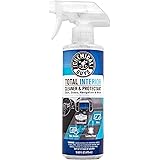
Chemical Guys, Total Interior Cleaner & Protectant, Leather & Vinyl, 16 oz | Cleans dashboards, seats, door panels, trim and glass in one step, leaving a fresh, streak-free, factory-style look
$11.97 (as of October 21, 2026 17:49 GMT -08:00 - More infoProduct prices and availability are accurate as of the date/time indicated and are subject to change. Any price and availability information displayed on [relevant Amazon Site(s), as applicable] at the time of purchase will apply to the purchase of this product.)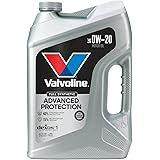
Valvoline Advanced Full Synthetic SAE 0W-20 Motor Oil 5 QT | Proven to maximize engine life, 40% stronger wear protection, 15% better deposit defense, up to 2.5X better heat protection
$31.97 (as of October 21, 2026 17:49 GMT -08:00 - More infoProduct prices and availability are accurate as of the date/time indicated and are subject to change. Any price and availability information displayed on [relevant Amazon Site(s), as applicable] at the time of purchase will apply to the purchase of this product.)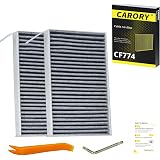
2PCS Cabin Air Filter with Activated Carbon for Tesla Model 3 (2017-2026), Model Y (2020-2026), OE# 1107681-00-A, CF12774, XC11952C, CF774
$16.99 (as of October 21, 2026 17:49 GMT -08:00 - More infoProduct prices and availability are accurate as of the date/time indicated and are subject to change. Any price and availability information displayed on [relevant Amazon Site(s), as applicable] at the time of purchase will apply to the purchase of this product.)
Rain-X 810363 Repellency Water Repellent Wiper Blades, 22" & 22" (2 Pack) | Premium Water Repellent Beam Blade, All-Weather Streak-Free Wipe, Enhanced Visibility, Universal Adapter, Amazon Exclusive
$39.42 (as of October 21, 2026 17:49 GMT -08:00 - More infoProduct prices and availability are accurate as of the date/time indicated and are subject to change. Any price and availability information displayed on [relevant Amazon Site(s), as applicable] at the time of purchase will apply to the purchase of this product.)