Disclosure: Some links in this post are affiliate links. If you purchase through them, we may earn a small commission at no extra cost to you. We only recommend gear we actually use or have thoroughly researched.
You do not need a $50,000 build to start overlanding with a Toyota Tacoma. You need a plan, a few smart upgrades, and the right mindset. This Toyota Tacoma overlanding beginner setup guide covers exactly what I did, starting with a stock 2009 Tacoma on a tight budget. Here is what worked, what I would skip, and what you need to do first.

Why the Tacoma Is Already a Great Overlanding Platform
The 2009 Toyota Tacoma is one of the most reliable trucks ever built. It has a proven 4.0L V6, a solid front axle on the 4WD models, and a frame that laughs at abuse. Toyota built this truck to work. Overlanders figured that out a long time ago.
Before you spend a dollar on mods, understand what you already have. The Tacoma comes from the factory with skid plates, decent ground clearance, and a transfer case designed for low-range crawling. That is more capability than most people will ever use on a weekend trip. The truck is not your limitation. Your preparation is.
This is not a truck review. This is a practical guide for the person who owns a Tacoma right now and wants to start getting off pavement without going broke. Let us get into it.
The First 5 Upgrades That Actually Matter
Ignore the YouTube builds with $3,000 suspension lifts and custom bumpers. Those are aspirational content, not a starting point. Start with what solves a real problem on the trail.
1. A Portable Air Compressor
Airing down your tires is the single most impactful thing you can do for off-road traction. Drop from 35 PSI to 18-20 PSI, and your tires flatten out, grip more surface, and absorb rocks instead of bouncing off them. You need a way to air back up when you hit pavement again.
A quality 12V compressor, such as the ARB Twin or the VIAIR 400P, does the job. Budget options like the Smittybilt 2781 work well for occasional use and cost under $100. Buy one before anything else. This is not optional.
2. Traction Boards
Getting stuck is not a matter of if. It is a matter of when. MAXTRAX and similar traction boards give you a self-recovery option when no one else is around. Slide them under a spinning tire, drive out, done. They weigh about 6 pounds each and mount flat on your truck bed or roof rack.
Buy a set of two. Mount them somewhere accessible. You will use them.

3. A Recovery Strap and D-Ring Shackles
A kinetic recovery strap is not a tow strap. A kinetic strap stretches and stores energy that yanks a stuck truck free without jerking the recovery vehicle. Pair it with two 3/4-inch D-ring shackles, and you have a basic recovery kit that fits in a bag under your seat.
This costs less than $80 total. Buy it now.
4. All-Terrain Tires
Your stock tires are highway tires. They are not designed for loose dirt, mud, or rocky trail surfaces. Upgrading to an all-terrain tire is the biggest performance jump you will make on a trail.
Good options for the Tacoma include the BFGoodrich KO2, Falken Wildpeak AT3W, and Cooper Discoverer AT3 4S. You do not need mud tires unless you regularly run deep mud. All-terrains cover 90 percent of overlanding scenarios and still drive well on the highway.
5. A Quality First Aid Kit
As a combat veteran, this one is not negotiable for me. Get a kit that goes beyond Band-Aids. You want a tourniquet, trauma dressings, a chest seal, and an Israeli bandage in a dedicated bag. Companies like MyMedic and North American Rescue make excellent vehicle kits.
Train on your kit. Knowing where everything is and how to use it in the dark matters more than the brand. Take a Stop the Bleed course. It is free and takes two hours. If you want to be prepared for any emergency on or off the trail, read our family emergency preparedness guide for a complete home and vehicle kit checklist.

Your Sleep Setup: The Heart of Any Overlanding Rig
You can day-trip in any truck. Overlanding means spending the night in the field. Your sleep setup determines how far you can go and how long you can stay out. Get this right, and you will use your truck more. Get it wrong, and you will stop going.
Option 1: Bed Platform with Ground Tent
This is the cheapest and most flexible starting point. Build or buy a flat sleeping platform for your truck bed that raises you above the wheel wells and gives you flat storage underneath. Sleep in the bed or pitch a ground tent beside the truck, depending on conditions.
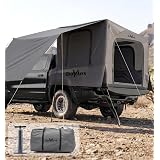
BravArrk Inflatable Truck Bed Tent with Detachable Zippered Awning | Pickup Truck Tent for 5.5ft-8ft Bed, 2 Mins Fast Setup Blow Up Tent for truck, PU3000 Waterproof Truck Tent for Camping
$269.99 (as of October 21, 2026 18:02 GMT -08:00 – More infoProduct prices and availability are accurate as of the date/time indicated and are subject to change. Any price and availability information displayed on [relevant Amazon Site(s), as applicable] at the time of purchase will apply to the purchase of this product.)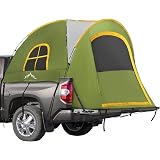
GoHimal Pickup Truck Bed Tent, 5.5-6.0FT Truck Tent for Camping(Green) | Portable,Double Layer,Waterproof PU2000mm
$59.99 (as of October 21, 2026 18:02 GMT -08:00 – More infoProduct prices and availability are accurate as of the date/time indicated and are subject to change. Any price and availability information displayed on [relevant Amazon Site(s), as applicable] at the time of purchase will apply to the purchase of this product.)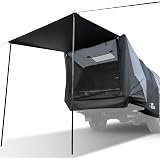
JOYTUTUS Truck Tent with Awning, Truck Bed Tailgate Tent | Pickup Camping Tent Canopy, Only Fits Full-Size Truck with Soft Topper or Camper Shell
$145.34 (as of October 21, 2026 18:02 GMT -08:00 – More infoProduct prices and availability are accurate as of the date/time indicated and are subject to change. Any price and availability information displayed on [relevant Amazon Site(s), as applicable] at the time of purchase will apply to the purchase of this product.)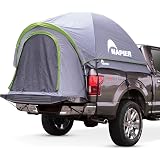
Napier Backroadz Truck Tent | 2-Person Pickup Truck Bed Camping Tent | Available in Multiple Bed Sizes | Sturdy and Spacious | Easy 10-Minute Setup | Rainfly Included
$183.99 (as of October 21, 2026 18:02 GMT -08:00 – More infoProduct prices and availability are accurate as of the date/time indicated and are subject to change. Any price and availability information displayed on [relevant Amazon Site(s), as applicable] at the time of purchase will apply to the purchase of this product.)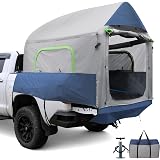
Truck Bed Tent for Camping Inflatable Pickup Truck Tent with Pump 5.5ft–8ft | 2 Mins Setup PU3000mm Waterproof Windproof, Double Layer Mesh Window & Door 4-Season Design
$198.52 (as of October 21, 2026 18:02 GMT -08:00 – More infoProduct prices and availability are accurate as of the date/time indicated and are subject to change. Any price and availability information displayed on [relevant Amazon Site(s), as applicable] at the time of purchase will apply to the purchase of this product.)A DIY bed platform costs about $100 in lumber and hardware. It takes one weekend to build. Store your gear in bins underneath and throw a sleeping pad and bag on top. This setup works for 90 percent of conditions and costs almost nothing.
Option 2: Rooftop Tent
Rooftop tents are popular for good reason. They keep you off the ground, set up in under two minutes, and feel like a real bed compared to sleeping on a pad. The downside: they are expensive ($800 to $3,000), add roof weight that affects handling, and raise your center of gravity on technical terrain.
If budget allows and you plan to use the truck regularly, a rooftop tent is worth every dollar. If you are testing whether overlanding is something you actually enjoy, start with the bed platform and upgrade later.
Water, Food, and Power: The Practical Foundation
Three things will end a trip early: running out of water, running out of food, and running out of power. Plan for each before you leave the driveway.
Water
Carry more than you think you need. A minimum of two gallons per person per day for drinking and basic hygiene. A 5-gallon water jerry can strapped to the bed is the simplest solution and costs about $30. Add a Sawyer or LifeStraw filter, and you can supplement from streams if needed. Never rely on finding water. Always bring water.
Food
Keep it simple. A two-burner camp stove, a cast-iron skillet, and a cooler with real food beat freeze-dried meals every time. For weekend trips, just cook real food. It is better for morale, and it costs less.
Power
A portable power station does the job for a beginner setup. The Jackery Explorer 500 or Goal Zero Yeti 500X will run your lights, charge your phones and radio, and keep a small cooler running for a weekend. Start with one unit before wiring a second battery.
Cell coverage disappears fast once you leave pavement. Your phone is useless without a signal. You need a dedicated navigation solution before you head out.
The Garmin inReach Mini 2 is the gold standard for off-grid navigation and two-way satellite communication. It lets you send an SOS signal from anywhere on Earth, share your location with family, and send short text messages without cell service. See the full device specs on the official Garmin product page. It costs about $350 plus a subscription. If you are going remote with family, this is not optional.
For maps, download Gaia GPS on your phone and load your route before you leave. The downloaded maps work offline. Combine that with a physical topo map of your area, and you have backup for your backup.
Tell someone your plan before every trip. Write down your route, your campsite, and when you plan to return. Leave it with someone who will call for help if you do not check in. This takes five minutes. It has saved lives.
The Tacoma Upgrades Worth Spending Money On
Once your basics are covered, here are the upgrades that make the most meaningful difference on the trail.
A Modest Suspension Lift
A 3.5-inch lift with quality shocks changes how the truck handles off-road without destroying highway manners. Rough Country makes a well-regarded kit specifically for the Tacoma at around $700-$1,000 installed. It raises clearance, levels the stance, and absorbs trail chop without beating you up on the commute home.
Skip the 6-inch lifts and coilovers until you know you need them. You might also find our vehicle emergency preparedness checklist useful for stocking your Tacoma before any remote trip. A modest lift plus good all-terrain tires changes the capability equation significantly without the handling trade-offs.

Rear Differential Locker
The Tacoma TRD Off-Road and TRD Pro models come with a factory rear locker. If your truck has one, use it. If it does not, an aftermarket locker is a significant capability upgrade for serious terrain. A locked rear axle means both rear wheels spin together, eliminating the open-diff spin-out that stops stock trucks on steep, loose terrain. This is a $400-$800 investment plus installation, but if you plan to push into technical terrain, it is the single best mechanical upgrade you can make.
Full Skid Plate Coverage
Protect what is under the truck. The factory skid plates cover the transfer case and fuel tank, but leave the oil pan exposed on some trim levels. An aftermarket skid plate system from SteelCraft or Cali Raised covers the full undercarriage and runs $200-$400. One rock hit on an unprotected oil pan ends your trip and your engine.
Gear That Lives in the Truck Year-Round
Beyond the upgrades, there is a core set of gear that rides in the Tacoma on every trip. Some of this is recovery equipment. Some is emergency gear. All of it has a purpose.
- Battery jump pack: A lithium jump pack lives under the seat. The Tacklife T8 and NOCO Boost Plus are compact enough to store in the center console. Starting a dead battery alone in the backcountry without another vehicle is a solvable problem if you’re prepared for it.
- Tire plug kit: A tire plug kit costs $12 and fixes most punctures in five minutes. Carry three or four plugs and a CO2 inflator as a backup to the compressor.
- Basic tool roll: Sockets, wrenches, zip ties, electrical tape, spare fuses, and a multi-tool. A 2009 Tacoma does not need much roadside maintenance, but being able to tighten a loose bolt or splice a wire is the difference between a one-hour delay and a rescue call.
- Fire extinguisher: Mount a small dry-chemical extinguisher inside the cab. Engine fires are rare, but they happen, especially in dry brush country during summer.
- Emergency blankets and headlamp: Two space blankets and a quality headlamp with fresh batteries take up no space and have helped people out of situations far worse than a dead truck.
None of this gear is exciting. All of it matters. Load the truck smart, and you can handle most mechanical emergencies without calling a tow truck at $200 per mile.
How to Plan Your First Overlanding Route
Start close to home. Your first trip should be somewhere you can drive home from if something goes wrong. Pick a Forest Service road you have never taken, drive until you find a dispersed camping spot, and spend one night. That is it. That is your first overland trip.
Use Gaia GPS to find and preview your route before you leave. It shows Forest Service road ratings, user-submitted track logs, and terrain elevation profiles. Cross-reference with the iOverlander app to find verified camp spots from other travelers. Between those two tools and a paper topo map from the ranger station, you have more information than any previous generation of off-roaders ever had.
Call the ranger district the week of your trip. Ask about road conditions, seasonal closures, and whether you need a permit for dispersed camping in that area. It takes five minutes. App data is often weeks behind actual trail conditions. Rangers know what is passable right now.
Frequently Asked Questions
Is a 2009 Toyota Tacoma good for overlanding?
Yes. The 2009 Tacoma with the 4.0L V6 and 4WD is one of the best beginner overlanding platforms available used. It has proven reliability, readily available parts, a strong aftermarket, and enough factory capability to handle most trails without any modifications. The truck is not the limiting factor for most beginners.
How much does it cost to start overlanding with a Tacoma?
You can cover the essentials for under $500 in gear. An air compressor ($80 to $150), traction boards ($60 to $250 depending on brand), a recovery strap kit ($60 to $80), and a solid first aid kit ($100 to $200) cover the critical basics. The truck is your biggest investment. Everything else is incremental and can be added over time.
Do I need a lift kit to go overlanding in a Tacoma?
No. A stock Tacoma handles 95 percent of Forest Service roads, and many maintained off-road trails without issue. A lift kit improves ground clearance and approach angles, but it is an upgrade, not a starting requirement. Start stock, learn the terrain, and add a lift once you have identified the specific limitations you are hitting.
What tires complete a Toyota Tacoma overlanding beginner setup?
The BFGoodrich KO2, Falken Wildpeak AT3W, and Cooper Discoverer AT3 4S are all strong options that balance off-road grip with everyday highway manners. For overlanders who spend more time on pavement than dirt, an all-terrain in the stock 265/70R16 size is the right starting point. Going wider requires checking clearance against any suspension lift you are running.
Do I need a heavily modified 4×4 with a lift kit and a rooftop tent to start overlanding?
No. One of the biggest misconceptions is that you need a “built” rig to go overlanding. Most established forest service roads and “Green” rated trails are accessible to stock high-clearance vehicles (like a factory SUV or truck).
How do I find legal places to camp and trails that won’t get me stuck or lost?
Use Specialized Apps: Tools like onX Offroad, Gaia GPS, or AllTrails are industry standards. They provide offline maps (essential when you lose cell service) and color-coded trails that indicate difficulty levels.
Your Toyota Tacoma Overlanding Beginner Setup: The Most Important Thing
Stop waiting until you have the perfect Toyota Tacoma overlanding beginner setup. The best overlanding rig is the one you actually go camping in. I have seen people with $80,000 builds that never leave pavement and guys with stock trucks sleeping in the bed having the best weekend of the year.
The Tacoma is already more capable than most trails require. Grab the basics, pick a route 30 minutes from home, and go. You will learn more from one weekend on dirt than from a hundred hours of YouTube research.
This Toyota Tacoma overlanding beginner setup guide exists because the barrier to getting started is lower than most people think. Your truck is ready. The question is whether you are.
DON’T FORGET YOU HAVE TO DRIVE HOME!!

EcoNour Car Windshield Sun Shade, Front Window Sun Blocker for SUVs,Sedan
$11.99 (as of October 21, 2026 17:49 GMT -08:00 - More infoProduct prices and availability are accurate as of the date/time indicated and are subject to change. Any price and availability information displayed on [relevant Amazon Site(s), as applicable] at the time of purchase will apply to the purchase of this product.)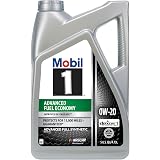
Mobil 1 Advanced Fuel Economy Full Synthetic Motor Oil 0W-20, 5 Quart | Enhanced Fuel Economy | 10,000-Mile Protection | Triple Action Formula
$31.97 (as of October 21, 2026 17:49 GMT -08:00 - More infoProduct prices and availability are accurate as of the date/time indicated and are subject to change. Any price and availability information displayed on [relevant Amazon Site(s), as applicable] at the time of purchase will apply to the purchase of this product.)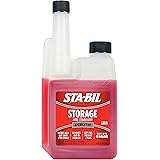
STA-BIL Storage Fuel Stabilizer, 16 oz | Treats 40 gallons. Keeps fuel fresh for up to 24 months during storage and helps protect against corrosion and ethanol damage
$11.99 (as of October 21, 2026 17:49 GMT -08:00 - More infoProduct prices and availability are accurate as of the date/time indicated and are subject to change. Any price and availability information displayed on [relevant Amazon Site(s), as applicable] at the time of purchase will apply to the purchase of this product.)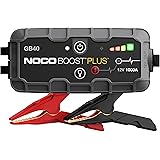
NOCO Boost GB40 12V 1000A UltraSafe Portable Lithium Jump Starter | Spark-Proof & Reverse Polarity Protection, For Car, Truck, Motorcycle, SUV, Boat, ATV, RV, up to 6.0L Gas & 3.0L Diesel
$99.95 (as of October 21, 2026 17:49 GMT -08:00 - More infoProduct prices and availability are accurate as of the date/time indicated and are subject to change. Any price and availability information displayed on [relevant Amazon Site(s), as applicable] at the time of purchase will apply to the purchase of this product.)